Today, specialized cancer hospitals such as Sloan Kettering and Dana-Farber are a familiar part of the medical landscape. This was not always the case. For much of the 19th century, cancer patients were so heavily stigmatized that most hospitals refused to admit them, even in early or mild cases. Unless they could afford private physicians, many were left to die at home without treatment or palliative care.
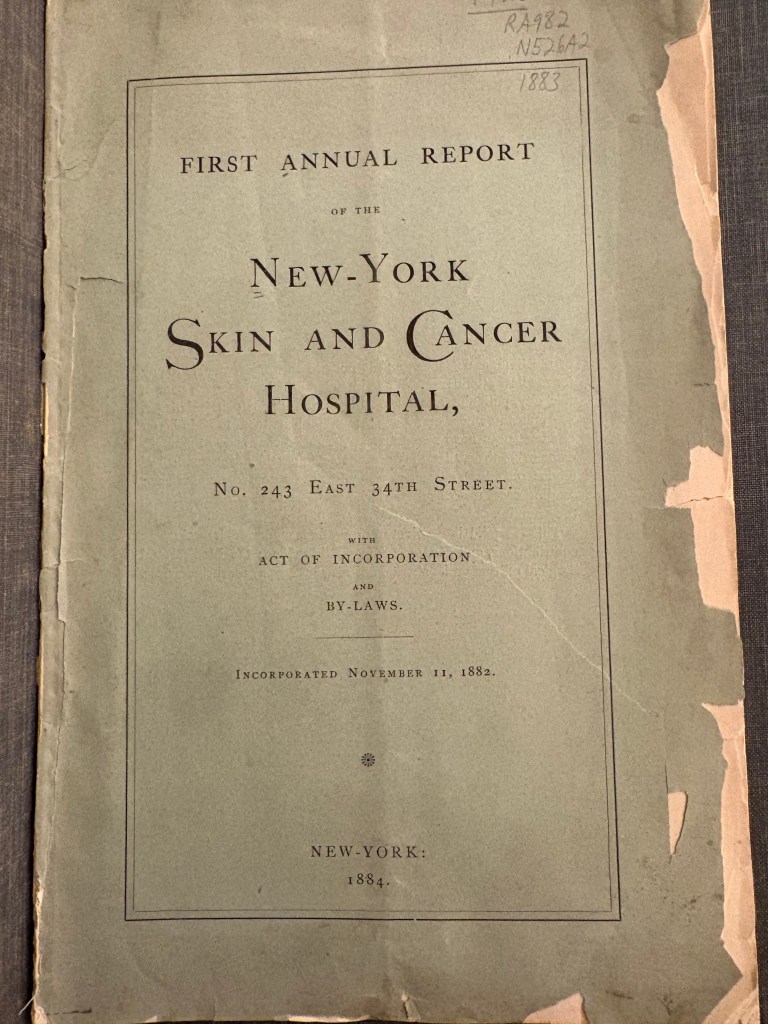
This began to change in the early 1880s. In 1882 and 1884, New York City saw the founding of its first two hospitals dedicated specifically to cancer care: the New-York Skin and Cancer Hospital and the New-York Cancer Hospital. Both were established as charitable institutions through collaborations between leading physicians—such as Lucius Duncan Bulkley and J. Marion Sims, pioneers of American dermatology and modern gynecology—and members of the city’s Gilded Age elite, including the Astor and Rockefeller families. These were not only the first cancer hospitals in New York City; they were the first in the United States, and the second and third in the world, following London’s Royal Marsden Hospital (est. 1851).
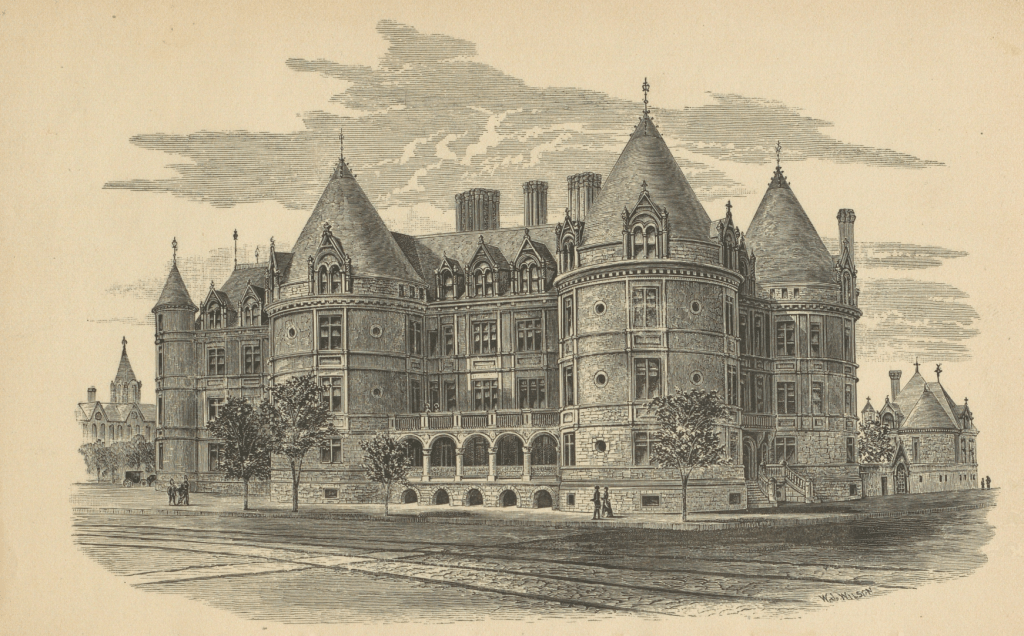
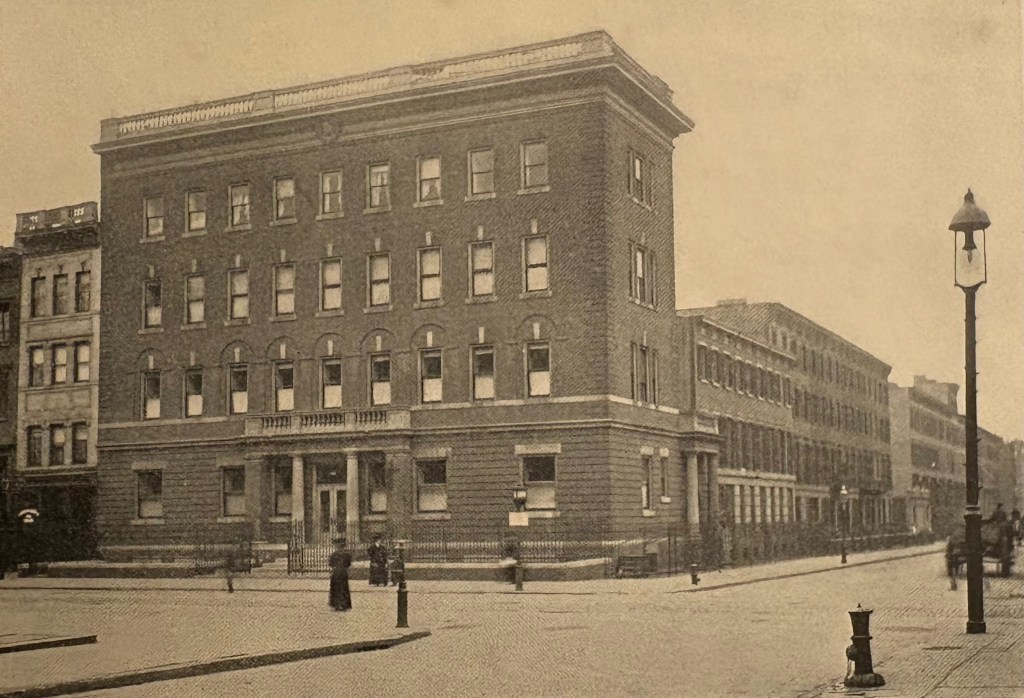
These hospitals’ legacies endure today. Each institution embodied both the highest aspirations and the deepest flaws of modern medicine. At their best, they provided refuge to some of the city’s most vulnerable cancer patients—many of them poor immigrants—regardless of ability to pay. They played a crucial role in reducing the stigma attached to cancer and in establishing cancer as a specialized field of medical study, what we now call oncology. Some of the earliest experiments in chemotherapy and radiation oncology took place within their walls. In a more concrete sense, both hospitals helped shape today’s cancer-care infrastructure: in 1949, the Skin and Cancer Hospital was folded into NYU Langone, and in 1960, the New-York Cancer Hospital became Memorial Sloan Kettering Cancer Center.
But in accomplishing these ends, they also exhibited the worst tendencies of modern medical institutions: medical racism, toxic experiments on non-consenting patients, in-fighting, and a turn away from charitable ends toward profit.
Which institution can rightfully claim to be the first cancer hospital in the United States? What conditions in 1880s New York made it possible for not one, but two, cancer hospitals to arise independently? And how did the ethics and politics of early oncology shape their formative years? Drawing on materials from the New York Historical and NYPL’s archives, this series explores these questions in depth.
Historical Background: Cancer’s Changing Face
Medical Revolutions
The 19th century was a period of profound transformation in medicine. Humoral theory—dominant since antiquity—was gradually displaced by cell theory, which identified cells rather than bodily fluids as the fundamental units of life. Enabled by improvements in microscope technology, cell theory gave rise to germ theory (the idea that microorganisms cause infectious diseases) and to cellular pathology, the study of disease at the cellular level. Advances in histology allowed physicians, for the first time, to distinguish definitively between malignant and benign tumors, enabling accurate cancer statistics and research programs. At the same time, germ theory made it possible to identify tuberculosis as a bacterial disease, raising hopes for both medical treatment and public health containment of not just TB, but all infectious diseases.
This wave of discovery inspired optimism that cancer, too, might be traced to a single infectious cause. At the inauguration of the New-York Cancer Hospital, Dr. William H. Draper—President of the New York Academy of Medicine and a consulting physician at the hospital—expressed this hope:
Recent investigations show that many of the diseases which have been supposed to be constitutional in their origin and the result of inherent and transmitted tendencies are in reality parasitic in their nature, and determined by definite, tangible, and demonstrable germs. These germs are planted in our bodies through the air we breathe, the clothes we wear, the water we drink, and the food we consume. This has been definitely proved of some of the more acute scourges of humanity, like cholera and typhoid fever; it is true of consumption and leprosy, and recent investigations lead us to hope that it may be true of cancer.
Today, we know that while infections can contribute to cancer, the disease is far more complex than 19th-century physicians imagined. No single agent causes all cancers, nor do infections lead to cancer as directly as Mycobacterium tuberculosis causes tuberculosis. Still, the conceptual shift Draper describes—from understanding cancer as a constitutional disorder with local symptoms (tainted blood or lymph producing tumors) to recognizing it as a local disease capable of spreading, or metastasizing—was a crucial step toward modern oncology.
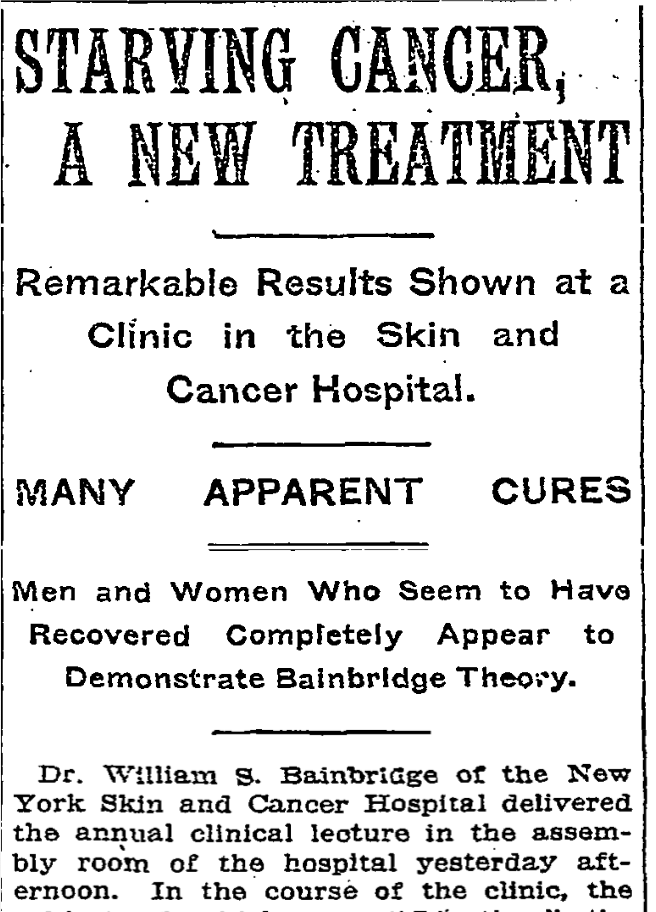
This new framework, combined with the widespread adoption of anesthesia and antiseptic techniques, helped produce what historians call the “surgical turn” in cancer care. Increasingly, physicians believed that early and aggressive surgery offered the best chance of cure and, in incurable cases, the most reliable means of prolonging life and reducing suffering. At the same time, speculation that cancer might begin as a localized infection encouraged experiments with non-surgical treatments, including early cancer vaccines, primitive chemotherapies, and caustic topical agents.
As optimism surrounding cancer research grew, so too did the need for specialized institutions. In New York City, tuberculosis rates were declining, while cancer rates were rising—an alarming trend frequently cited by the founders of both hospitals. Yet most general hospitals still refused to admit cancer patients. Cancer was feared to be contagious, considered visually disturbing to other patients, and required prolonged care that general hospitals were ill-equipped to provide. The New-York Cancer Hospital emerged in part from J. Marion Sims’ decades-long but ultimately unsuccessful campaign to persuade the New York Women’s Hospital (an institution he helped found) to admit cancer patients. His advocacy led instead to his censure and eventual removal by the hospital’s board.
Unlike diseases such as cholera and tuberculosis, which disproportionately affected the poor and working classes, cancer was widely perceived as striking across social boundaries. By the 1880s, it had become increasingly associated with aristocratic classes and so-called “civilized races,” a perception that reshaped public attitudes and generated greater sympathy among wealthy donors. This shift was reinforced by a series of highly publicized cancer deaths during the decade—what one hospital physician called an “unparalleled event in history”: President Ulysses S. Grant in 1885, King Ferdinand II of Portugal in 1885, and German Emperor Frederick III in 1888.
At the inauguration of the New-York Cancer Hospital, Dr. Fordyce Barker, an obstetrician at Bellevue Hospital and a consulting physician at the NYCH, articulated this reframing of cancer in explicitly racial and class-based terms:
Cancer is not a disease due to misery, to poverty, to bad sanitary surroundings, to ignorance, or bad habits. On the contrary, it is a disease of the most highly civilized, the most cultured, the wealthy, and of localities which are the most salubrious. One of the characteristics of cancer is that, unless the brain is involved, it leaves the intellectual power and force unimpaired. Nay, it seems that in some cases it almost increases these qualities. […] It is a disease which is much less frequent in the colored than in the white race, hence the mortality from it is greater in the North than in the South. It causes the greatest proportion of deaths where there are the greatest proportion of people of advanced age,—that is to say, in the New England States. Hence in any given locality, a large proportion of deaths from cancer indicates, to a certain extent, that the locality is a healthful and a long-settled one.
In his reference to cancer’s increase of intellectual power, we see Barker appropriating for cancer not just the positive medical associations TB had recently begun to acquire, but its romanticized cultural connotations, what Susan Sontag refers to as the “inveterate spiritualizing of TB and the sentimentalizing of its horrors,” which made TB a function of inward passion burning so bright as to consuming the subject into a poetic other-worldliness. Barker underscores cancer’s romantic nature by telling of a patient of his, a writer, whose inward “will force” was intensified by cancer despite his outward pallor. Owing to this supercharged willfulness, in the months before his death, “he succeeded in accomplishing a larger amount of work, and receiving a greater pecuniary reward for it, than in the history of the world was ever before acquired for literary work in so short a period of time.”
Gilded Age Social Turbulence
While theoretical and technological advances played an essential role in transforming cancer’s medical and moral status, the forces driving institutional change were just as much economic, social, and political. As Barker’s remarks suggest, cancer’s partial destigmatization depended on recasting it as a disease of “healthful and long-settled” communities—of the white, wealthy, and culturally dominant. (This despite nearly half of NYCH’s patients being immigrants from places like Ireland, Germany, Russia, and the Caribbean.)
Such arguments echoed the rhetoric of early cancer statisticians like Frederick L. Hoffman, who warned, as historian Jackson Lears writes, that “decadent Anglo-Saxons were being replaced by inferior immigrant stock,” a process politicians and cultural commentators warned could lead to race suicide. If the city could not care for diseases afflicting white old-stock communities, what hope remained for preserving this supposedly endangered population? As we will explore in Part II, many of these hospitals’ endowments came from elite families personally affected by cancer and confronted with its apparent hopelessness.
At the same time, cancer philanthropy served another function in the Gilded Age: image management. As Lears notes, anxieties about “an irresponsible elite’s destruction by an unleashed rabble” intensified amid labor unrest, mass immigration, and staggering industrial wealth. Charitable institutions such as free cancer hospitals offered moral justification for fortunes built on exploitation—whether through enslaved labor, monopolies, corruption, or fraud. Viewed critically, philanthropy functioned as a means of transforming morally suspect wealth into social legitimacy.
John E. Parsons, the first president of the New-York Cancer Hospital, alluded to these tensions in his address at the hospital’s grand opening in 1887:
Tell me not that riches necessarily harden the heart. Tell me not that advanced civilization separates between poverty and distress on the one side, and on the other those who have received the great blessings which have come to so many of us. These [pointing to the carriages and liveried servants] are the evidence that this is not so. It is upon those who, by coming here now, have shown their interest, that we shall depend in the end, not only for money, but for their personal effort, without which the Hospital cannot be a success.
Parsons’ remarks carried personal weight. He amassed his fortune as a lawyer for Domino Sugar, a company rooted in enslaved labor and infamous for horrendous working conditions suffered by primarily immigrants. In 1895, he successfully defended the sugar industry against a federal antitrust case—an outcome that stalled meaningful antitrust enforcement for decades, until its effective overturn in the 20th century.
~ ~ ~
Taken together, these technological, theoretical, clinical, economic, and cultural transformations made the 1880s a pivotal moment in the history of cancer care. In Part II, we turn to the founding of the first cancer hospitals themselves, examining how their competing visions of treatment and care shaped early oncology—and set the stage for tensions that would define the field for years to come.
 Leland Jasperse, Ph.D.
Leave a comment