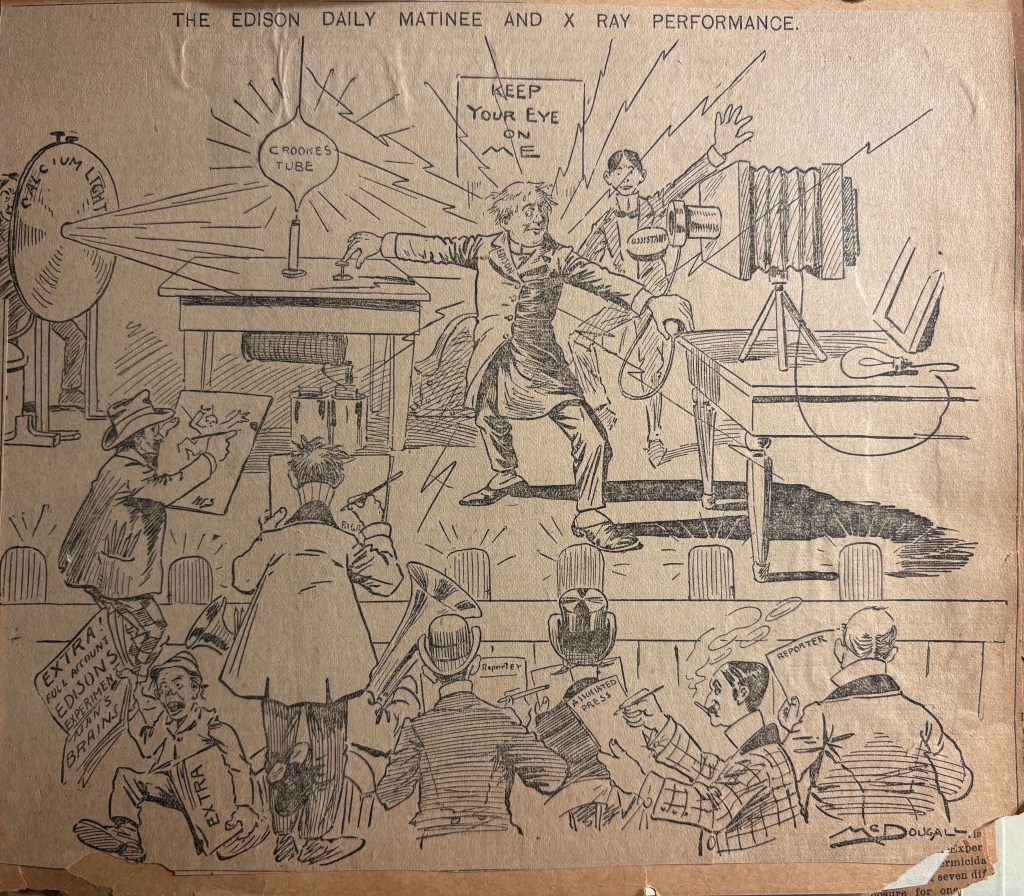
Wilhelm Conrad Röntgen discovered the X-ray in November, 1895. News of the discovery of a novel kind of ray with a mysterious force (“X”) at its core—at once invisible and capable of revealing the invisible—immediately fascinated not just medical men, but grabbed hold of the imagination of the general public. Newspapers abounded in large prints presenting shocking new views of familiar life, from human limbs and the brain to infants and animal life. Edison and Tesla very publicly competed to rapidly innovate more powerful X-rays and new uses for them: Edison gave weekly, live demonstrations of x-ray’s uses (satirized as a “matinee,” underscoring its theatricality, the below 1896 cartoon), while Tesla undertook increasingly outlandish experiments, including deploying x-rays to imprint images from the outside directly onto the brains of subjects. The vanquishment of the invisible, the secretively opaque, felt nigh, and, especially when directed at penetrating the flesh to expose the body’s mysterious interior, there was something distinctly voyeuristic about this mass fascination.
Visual pleasure—the pleasurable, even erotic, fascination in looking—was at the heart of the x-ray’s meteoric influence in the decade immediately following its discovery. This might be counterintuitive for most of us, who today encounter the procedure only when something’s gone wrong. And, given the now well-known harms of x-ray radiation, x-rays are more likely to evoke dread than to titillate. That said, most of us can also tap into that uncanny sense of seeing into our bodies, as if the x-ray is stripping away some of our body’s unintelligibility to reveal mysterious truths about our constitution. This was the sense that abounded in late-19th century popular culture as the x-ray took off. We can see in the few selections of early x-rays below the manner in which the x-ray afforded a new kind of beauty to looking at ordinary things.
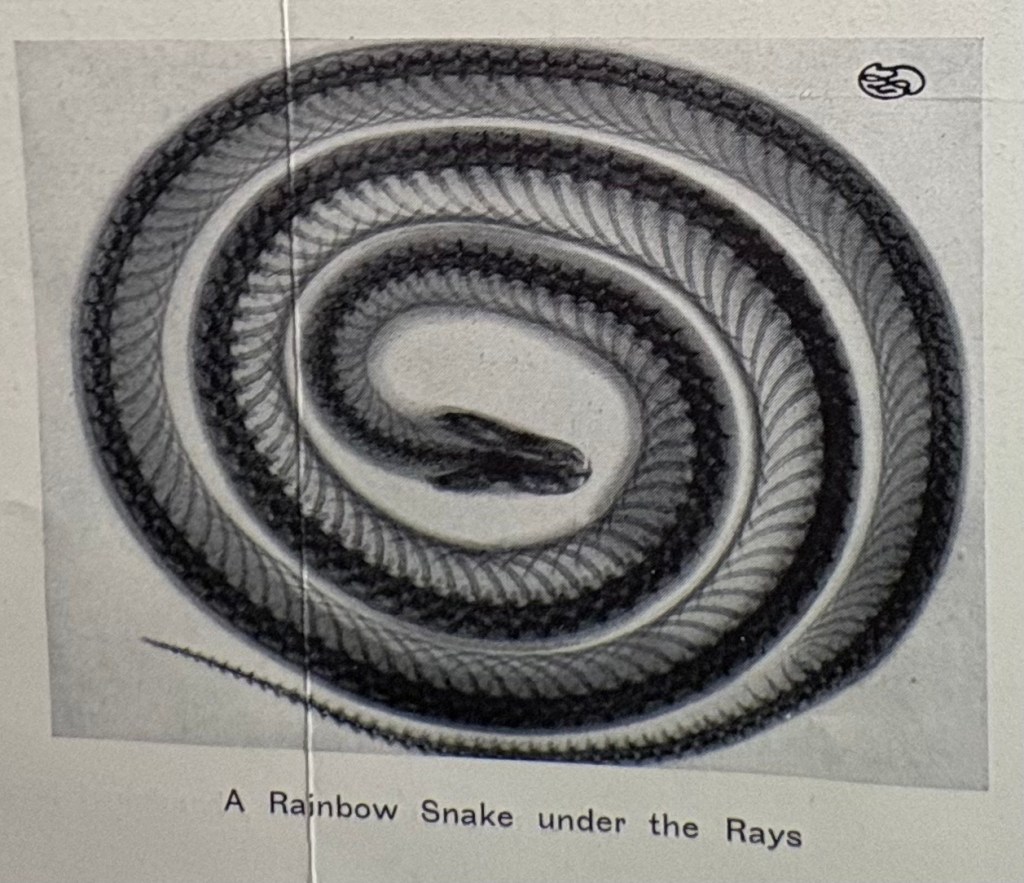
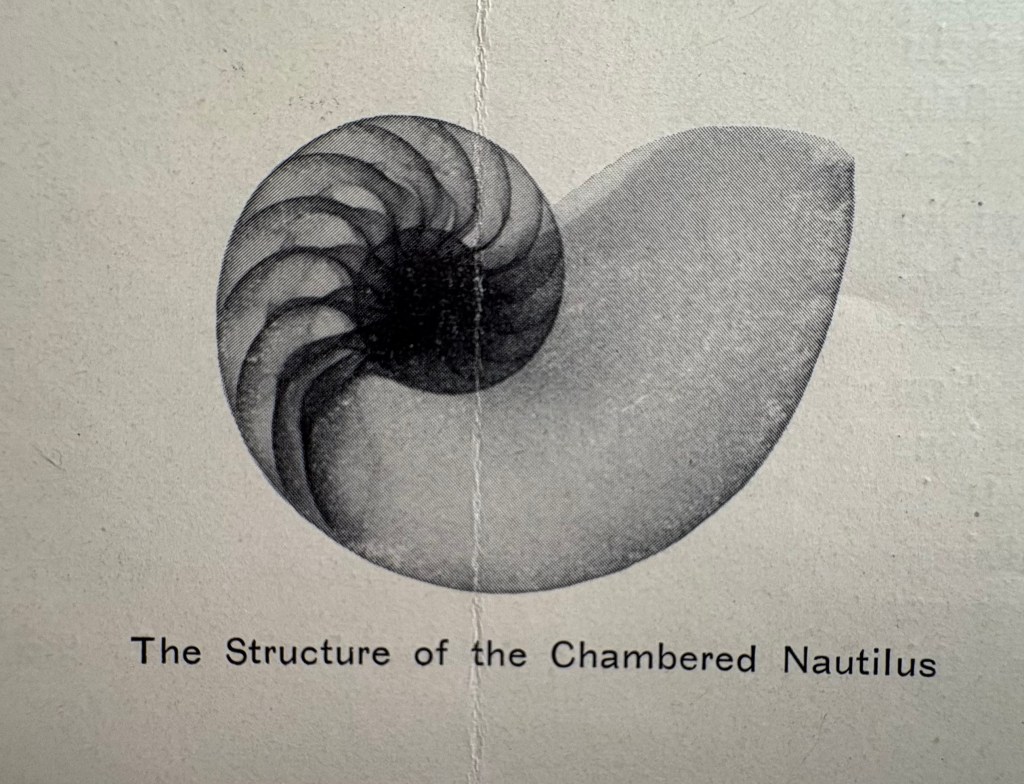
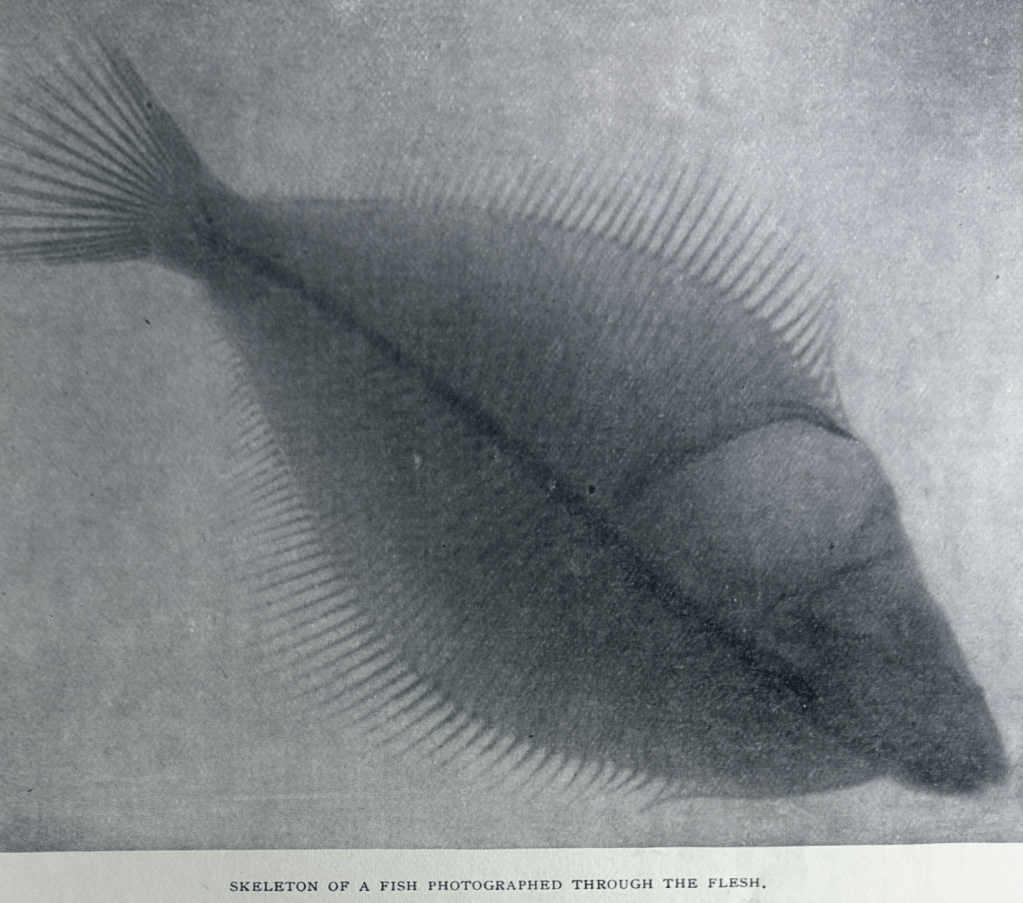
Although today the x-ray is a thoroughly medical, technical method cut off from more aesthetic visual modes like film and photography, at its advent, the x-ray was frequently called “The New Photography” because it carried with it not just new functional applications (e.g. locating shrapnel lodged in the body), but also artistic and social potential. Indeed, an April 1896 article in McClure‘s refers to the x-ray as “the new marvel in photography,” and one of the earliest books on x-ray methodology was titled “The X Ray, or Photography of the Invisible.” This book and others are geared not just at clinicians, but provide direction to amateur x-ray practitioners, capturing the period’s sense that the x-ray would become as widespread and casual an activity as photography.
The new kind of pleasure in looking enabled by the x-ray exceeded an appreciation of the formal beauty of life that characterizes the above pictures. The x-ray tapped into a more primary and sexual urge to visually possess. Freud, writing contemporaneously to the x-ray’s emergence, theorized scopophilia as a component instinct of sexuality. Scopophilia, for Freud, centered on voyeurism, taking others as objects subjected to a controlling and penetrative gaze, a way of looking structured by the propulsive desire to see private and forbidden parts of the body and its activities. The x-ray, with its literal penetrative capacity to reveal private parts, unleashed mass scopophilic drives, the depiction of which splashed across early popular press accounts of the technology.
Below, I present a few of my favorite examples of the popular press’ own x-ray-like exposure of the scopophilic impulses underlying the mass frenzy over x-rays. Laura Mulvey, in her classic essay on the male gaze, argues that because of the patriarchal control of the means of producing images and visual narrative, woman has often been the subject of a male-coded voyeurism that seeks to possess, penetrate, and control her as a means to pleasure. Although she focuses on film, we can see a similar situation emergent in the below cases: the x-ray photographer is universally male, the subject is always an Other, and the form that otherness often takes is femaleness.
Take the front page coverage of the first x-ray of an adult torso made by Dr. William Morton. Although the point of the project was to capture an adult torso, it’s the the female subject’s heart, faintly and incidentally visible, that receives headline attention, attention-grabbing insofar as it carries with it the metaphorical weight of peering into the seat of women’s erotic and romantic desires. This is emphasized by the visual layout of the page, in which the x-ray floats above the scene of its capture like an etherial halo, a specter of nakedness juxtaposed with the subject’s seductive silk dress (which itself obscures the pelvic region of the x-ray). Morton stands erect over the subject, while she is physically bound to a bed, supine beneath him. The hovering prominence of the torso places the reader in Dr. Morton’s point of view, treating the reader to taste of visual omnipotence.
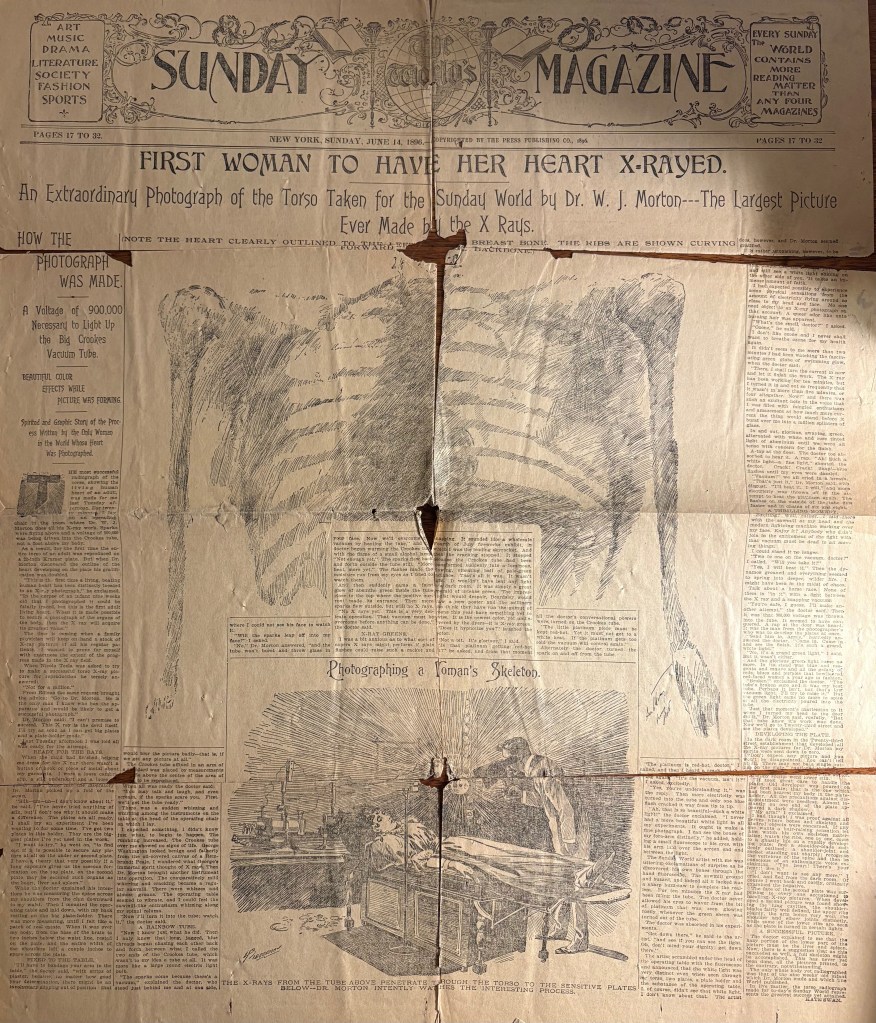
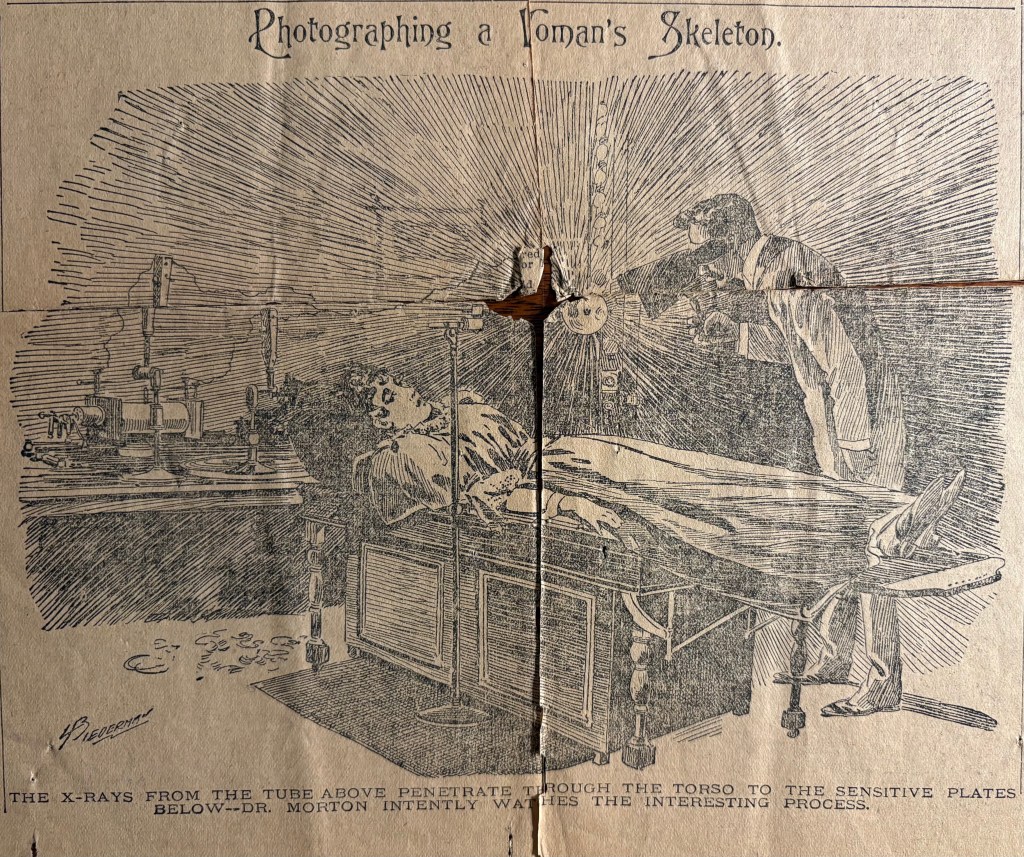
The sexual charge of this encounter is underscored by the subject’s firsthand account of the experience, which brackets the images. She describes wearing a “loose slip” and “silk underskirt,” inviting the reader’s imagination inside the warmth of her gowns and into their sensual tactility, a move mirroring Morton’s own, who she says “picked up a fold of the gown” and awkwardly commented on its silkiness. She writes about “mounting” and then being bound to the table while Morton measured her from her chin “downward to my waist.” The capture is filled with all the animal noises of sex. Morton tells her she’s allowed to “scream” during the procedure; from her perspective, it’s the x-ray machinery itself that “groans” and “vibrate[s]” with an “enthusiasm whizzing along my spinal column.” “Does it hypnotize you?,” Morton asks, evoking the psychosexual dynamic of Charcot’s hysterics made malleable to the penetrative suggestions of the clinician.
Another 1896 comic moves the voyeur from the omnipotence of the doctor to the Peeping Tom’s perversity. Miss Camerer and Mr. Kathode steal away in private to canoodle. Miss Camerer’s rather randy-looking father decides to spy on them unobserved, a voyeuristic vantage enabled by the x-ray.
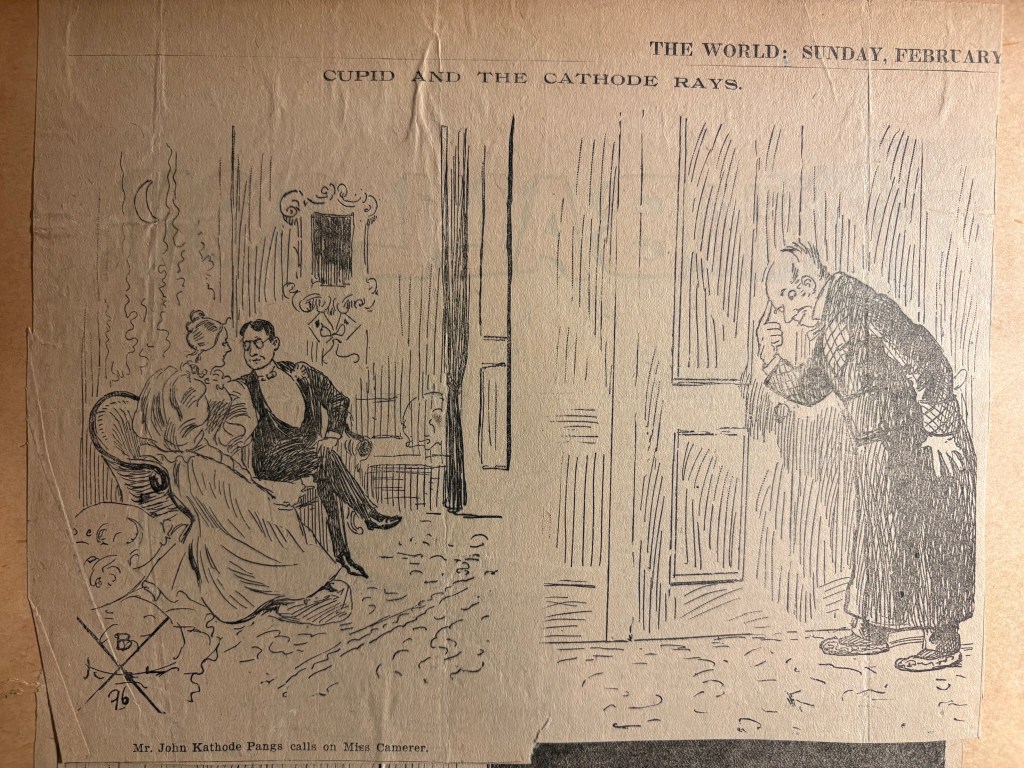
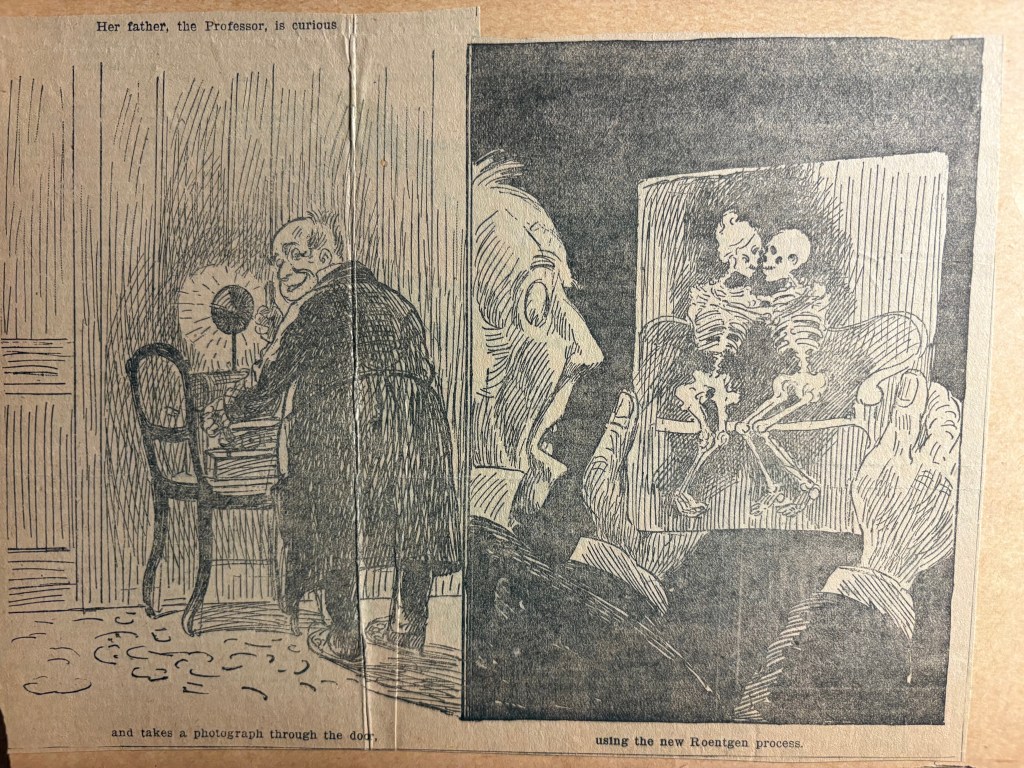
The resultant photo successfully penetrates cupid’s private space, revealing an amorous liaison that shocks, and perhaps arouses (recalling Hujar’s Orgasmic Man), Miss Camerer’s father, amplified by the visual joke on “boning.” This visual joke, arresting because it juxtaposes the heat of youthful sexuality with skeletal mortality, may be all the more unnerving insofar as it points back to the professor’s own relative decrepitude that keeps him outside looking in on the sexual scene.
The potential ambivalence of the x-ray voyeur—wherein what is erotic in its affirmation of visual omnipotence is also unnerving in its exposé of existential mortality—is emphasized in a striking variant on the above situation published the same year.
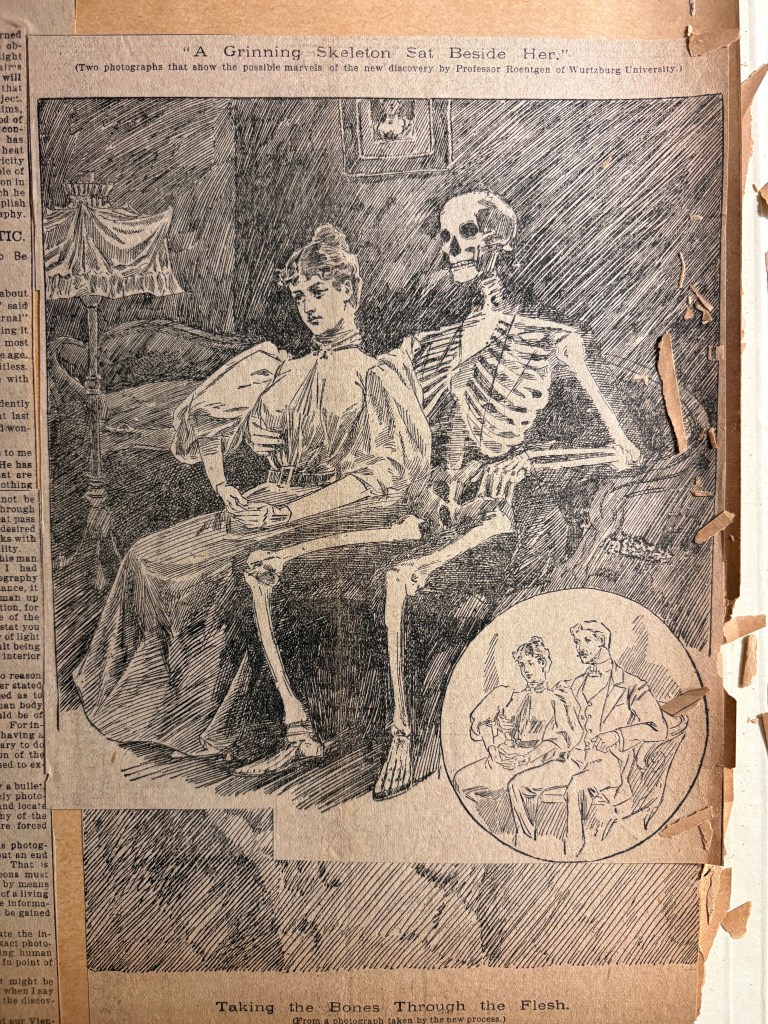
This is one of the only x-ray depictions in which it is the man, in explicit contrast to the woman, selectively subjected to the x-ray’s view. Here, what photographically looks like an idealized romantic scene, the woman leaning upon the larger, erect man for support, is transformed under the x-ray. The woman’s masculine pillar turns out to be dead inside as the hetero-romantic ideal is rendered into a more horrific scene almost out of Pyscho.
There’s an ambivalence here. The presumably male taker/viewer of the x-ray in a sense emasculates his competitor, that is, the more active (as in, non-voyeuristic) model of masculinity. At the same time, this emasculation inevitably points back to the taker/viewer’s own capacity for being stripped down himself, to his own skeletal baseness. I understand this ambivalence dynamic as analogous to the castration anxiety that Mulvey argues always threatens to destabilize the male gaze: yes, mastery of the woman is a source of visual pleasure, but she also bears within her own castration the potential for the male viewer’s own unmanning. The above image is haunted by a similar violation, underscored by the sodomical connotations of its caption: “Taking the Bones Through the Flesh.” The ambivalence of the caption pivots on the word “take”: to “take” an image of another’s bones through flesh is also to “take” a boning through one’s own flesh, through the sudden emasculation of mortality salience.
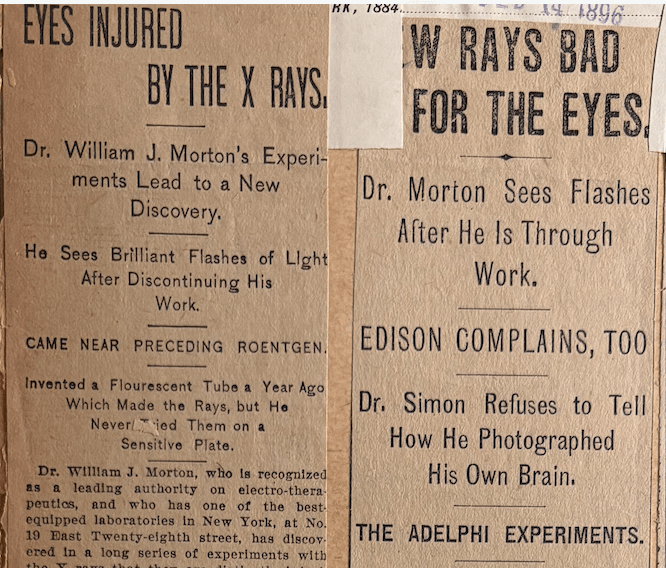
Indeed, many of the first male practitioners of x-ray photography were also the first to be maimed by acute radiation syndrome. Dr. Morton, so erect and visually astute in the first image we examined, would sound alarm bells have partially losing his vision from radiation over-exposure. Meanwhile, Edison, one of the earliest and most enthuasiastic boosters of the x-ray, disavowed the technology in 1903, declaring, “Don’t talk to be about X-rays; I am afraid of them.” This followed from radiation poisoning suffered by his beloved assistant Clarence Madison Dally, who, very much in keeping with theme of emasculating mortality, rapidly lost his hair, became covered in wrinkles, and had to have both his arms amputated—all before dying of mediastinal cancer less than a decade after Röntgen’s miraculous discovery.
 Leland Jasperse, Ph.D.
Leave a comment