I have a new peer-reviewed public history post, “Seductions of the Transparent Body: X-Rays, A.I. Body Scans, and Cancer,” out in Nursing Clio. The article places the proliferation of A.I.-assisted full body MRI scans that promise to detect everything from aneurysms to cancer far before traditional doctors can, and often marketed to capitalize upon patient fears / frustrations with medical neglect, within America’s longer history of radiological crazes. I discuss both the durability and the risks of popular fantasies which align bodily transparency with health.
The historical content of this piece comes from my time working with the William J. Morton Papers at the New York Academy of Medicine. Morton was son of William T.G. Morton, one of the pioneers of modern anaesthesia, and was a physician at the New York Post-Graduate Medical School and Hospital. He was also a pioneer of early X-ray technology, helping to improve the technique and image resolution of radiology in the months and years following its discovery by Röntgen’s in November, 1895. He authored America’s first radiology book, Photography of the Invisible and Its Value in Surgery, which blends medicine with an appreciation for the photographic and philosophical revolution unleashed by X-rays.
Fortunately for historians and an interested public, he kept a scrapbook documenting the splash X-rays made in both the technical and popular press. It documents the potency of bodily transparency as a medical and popular fantasy, which was reported on in inflated terms across the first decades of radiology. Thomas Edison claimed that X-rays would soon be extended to geological bodies, revealing the location of minerals and ore; Nikola Tesla speculated that X-rays would soon be used to beam chemicals into the brain; doctors at the College of Surgeons and Physicians claimed they had found evidence that X-rays aimed at the occipital lobe could directly transmit images into the brain; Columbia Professor Max Osterberg announces that he had resurrected drowned animals using the energy of X-rays. And on and on…
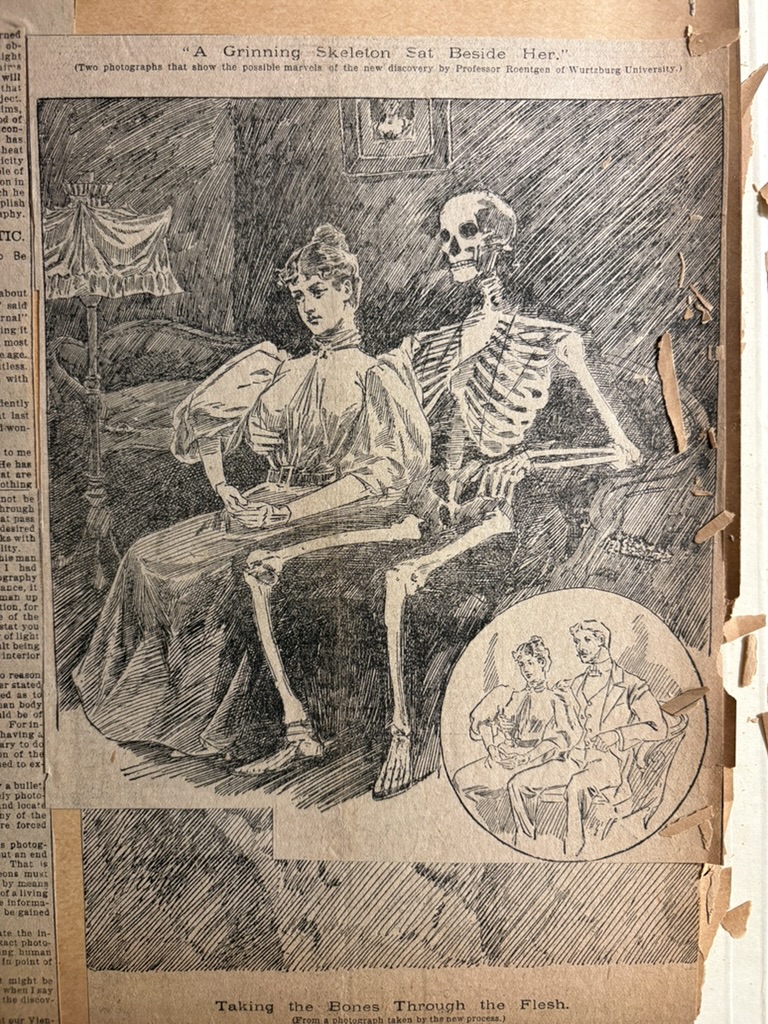
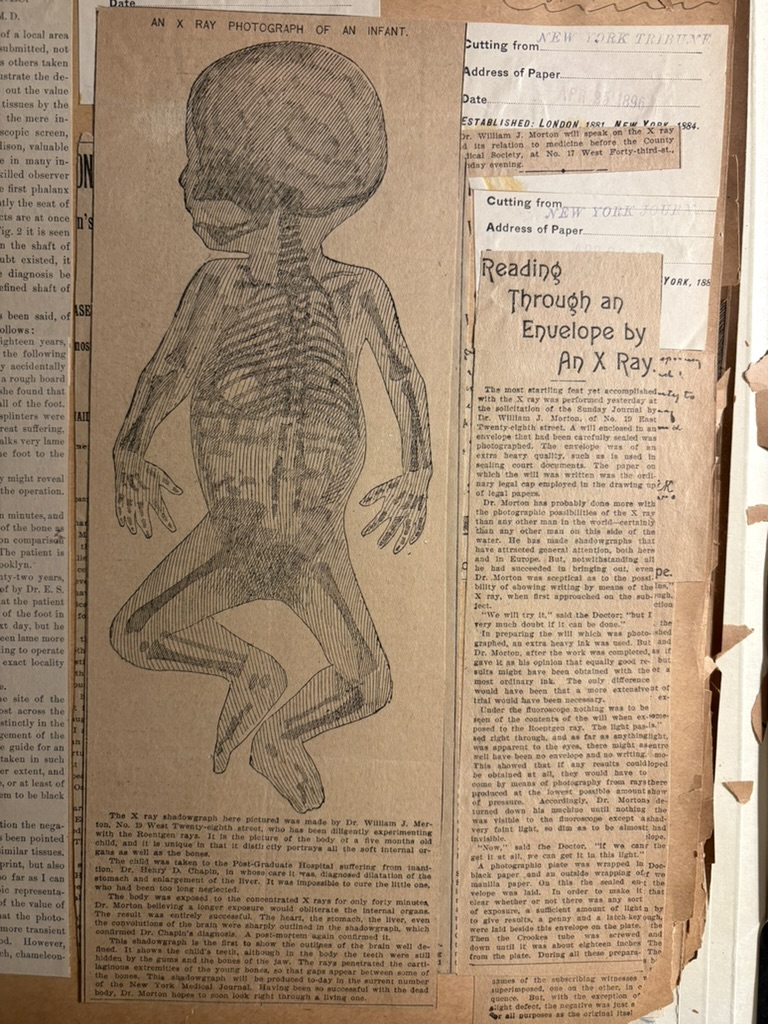
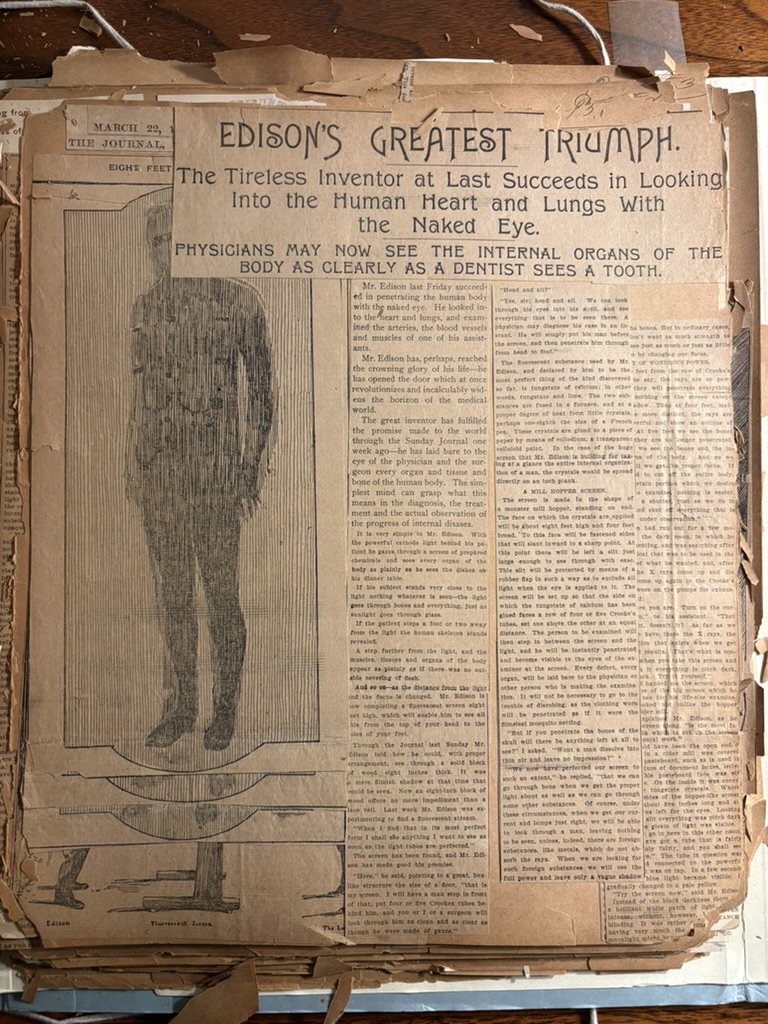
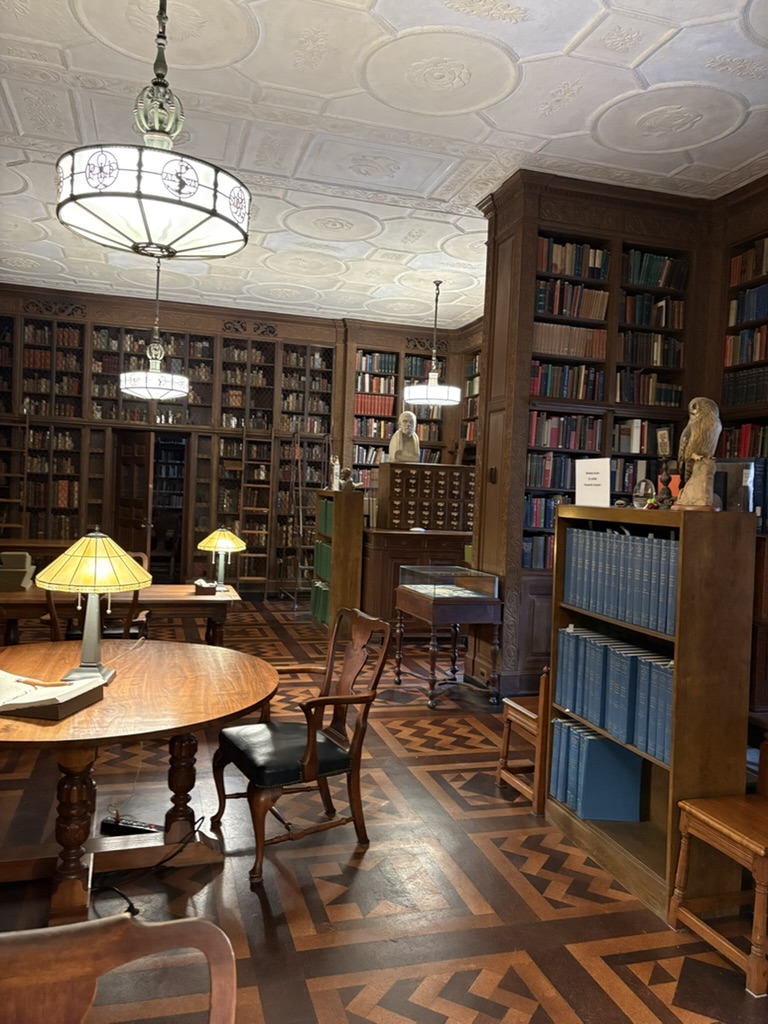
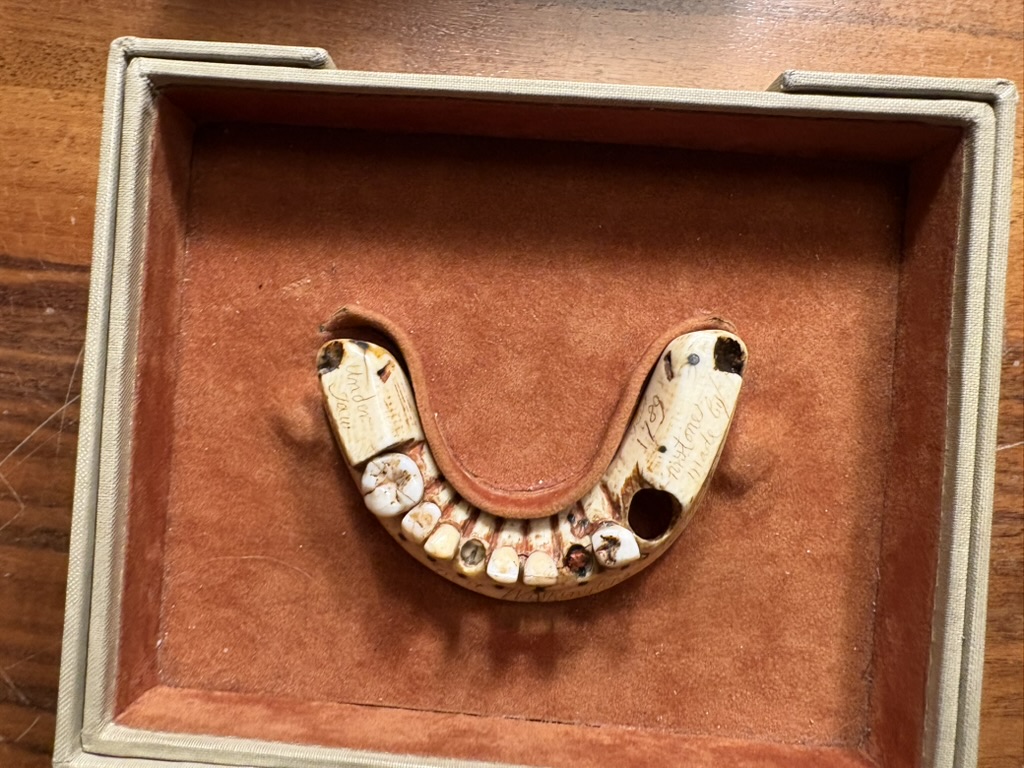
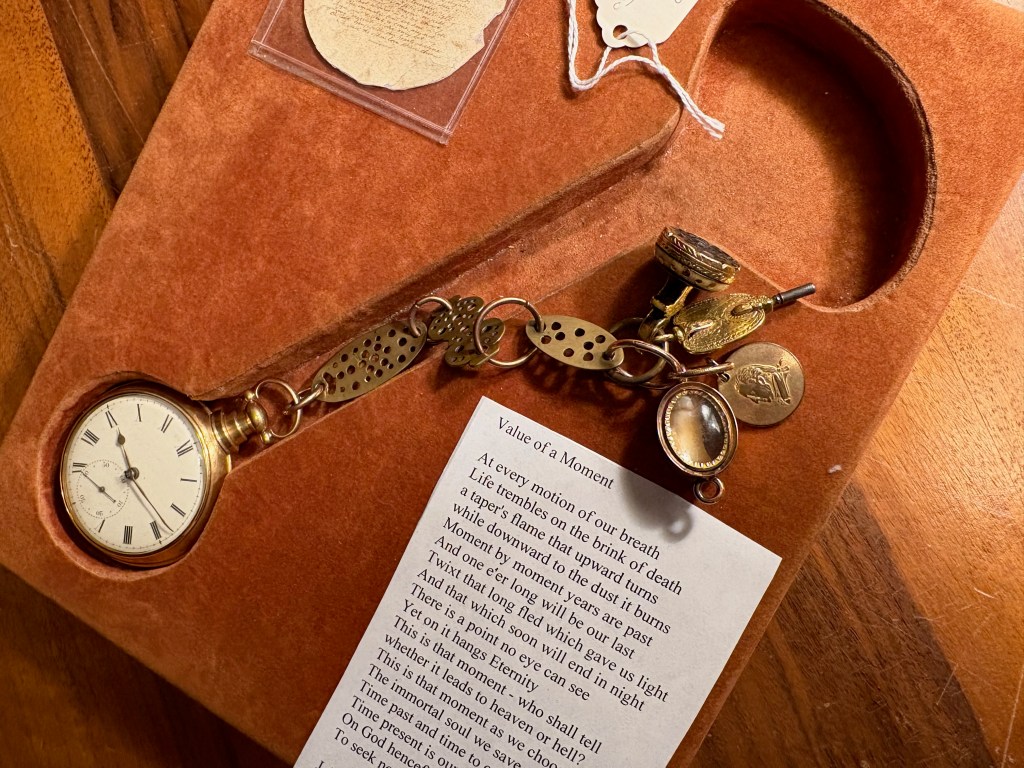
I highly recommend giving the New York Academy of Medicine a visit, even if just to encounter the beautiful reading room (pictured below) and eccentricity of its collection. While I was there, Arlene Shaner, NYAM’s historical collections reference librarian, brought out a set of George Washington’s dentures, alongside his dentist’s commemtorative pocket watch, to which he attached “charms” containing teeth he had removed from Washington’s mouth!


Leave a Reply